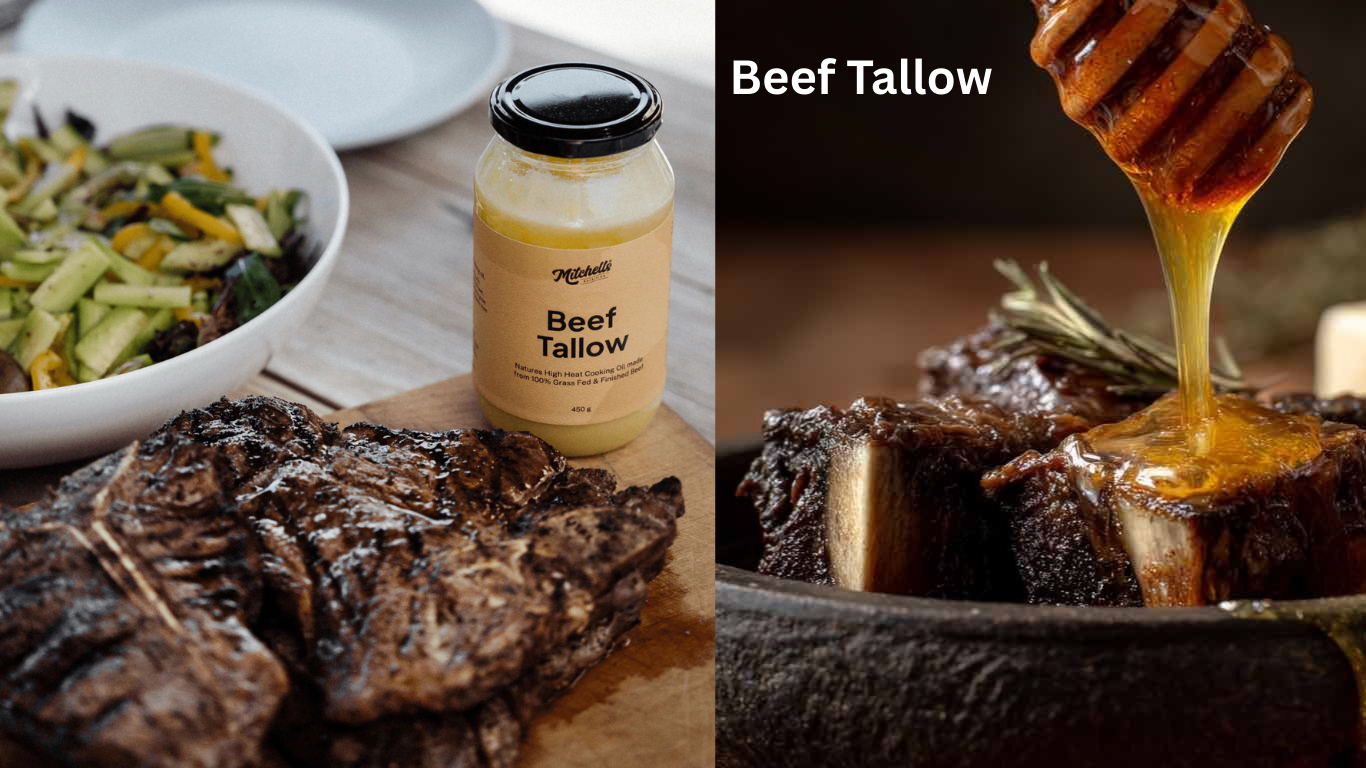
Beef Tallow once a staple in kitchens and households, is making a notable comeback in modern cooking, skincare, and traditional practices. Derived from rendered beef fat, tallow is a versatile ingredient that has been used for centuries in cooking, soap-making, candle production, and even skincare routines. Its rich composition and high smoke point make it a favorite among chefs and home cooks who appreciate natural, wholesome ingredients.
This article explores the history of beef tallow, its nutritional profile, culinary applications, health benefits, and alternative uses beyond the kitchen. Understanding tallow’s multifaceted uses provides insight into why this traditional fat is regaining popularity among contemporary audiences.
What is Beef Tallow
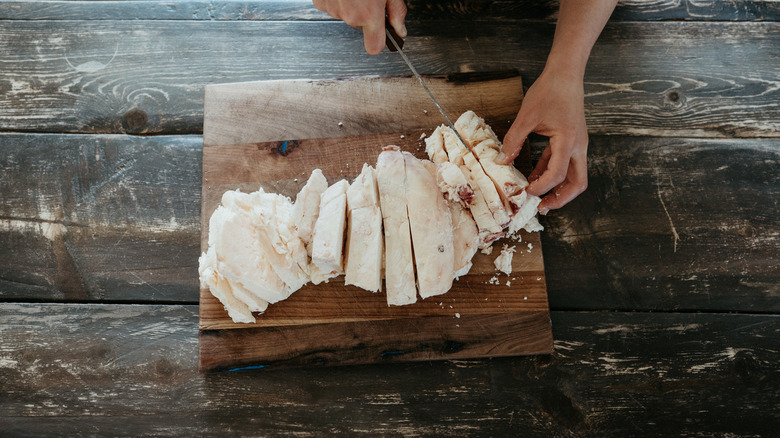
Beef tallow is rendered fat obtained from cows, typically from suet, which is the hard fat around the kidneys and loins. Rendering involves slowly heating the fat to separate the pure fat from connective tissues and impurities, resulting in a clean, shelf-stable product. The final product is a solid at room temperature, light beige in color, and has a slightly beefy aroma.
Historically, tallow was widely used before the advent of vegetable oils and margarine. It was valued for its stability, long shelf life, and versatility in both cooking and non-culinary applications. Unlike many modern processed fats, tallow is natural and minimally processed, making it appealing to those seeking whole-food ingredients.
The unique chemical composition of beef tallow gives it a high smoke point — typically around 400–420°F (204–216°C) — which allows it to be used for frying, roasting, and sautéing without breaking down and producing harmful compounds. Its rich flavor and smooth texture make it an excellent alternative to vegetable oils for certain recipes.
Historical Significance of Beef Tallow
Beef Tallow has a long and storied history. In Europe and North America, it was commonly used in households from the 18th through the early 20th centuries. Before refrigeration became widespread, tallow served as a stable cooking fat that could be stored for months without spoiling.
Beyond cooking, tallow was essential for candle making. Tallow candles provided lighting in homes and businesses before electricity became commonplace. Soap production also relied heavily on animal fats, including tallow, due to its saponification properties.
Cultural and culinary traditions in many countries incorporated beef tallow into staple recipes. From traditional British roast potatoes to French confit and Native American pemmican, tallow was valued for its energy density, flavor, and versatility. Today, the resurgence of traditional and ancestral cooking methods has revived interest in beef tallow for its culinary and historical relevance.
Nutritional Profile and Health Benefits
Beef tallow is primarily composed of saturated fats but also contains monounsaturated and small amounts of polyunsaturated fats. It is a dense source of calories and provides fat-soluble vitamins like A, D, E, and K, especially if sourced from grass-fed cows.
One of the notable benefits of tallow is its stable structure when exposed to heat. Unlike some vegetable oils, which can oxidize and produce harmful free radicals at high temperatures, tallow remains stable during cooking, making it a safer option for frying or roasting.
Some proponents of traditional diets, such as ketogenic and paleo lifestyles, value beef tallow for its energy density and nutrient content. While moderation is key due to its saturated fat content, incorporating tallow into a balanced diet can provide a natural, unprocessed fat source that supports satiety and nutrient absorption.
Culinary Uses of Beef Tallow
In the kitchen, beef tallow shines for its versatility and flavor-enhancing properties. Its high smoke point makes it ideal for deep-frying foods such as French fries, chicken, and doughnuts. Chefs often praise tallow-fried foods for their crisp exterior and rich, savory taste.
Roasting vegetables in tallow adds depth and a natural, meaty flavor. It can also be used in pie crusts, biscuits, and pastries as a substitute for butter or shortening, producing a flaky, tender texture. Tallow can be melted and used as a cooking fat for sautéing or searing meats, where it contributes both flavor and moisture retention.
Additionally, tallow can be infused with herbs or spices to create flavored fats, which can elevate dishes like roasted potatoes, sautéed greens, or grilled vegetables. Its neutral yet rich flavor provides a perfect canvas for experimentation in gourmet and home kitchens alike.
Non-Culinary Applications
Beyond cooking, beef tallow has a variety of traditional and modern uses. In skincare, it is prized for its moisturizing properties and compatibility with human skin. Tallow-based balms and creams can help soothe dryness, protect against harsh weather, and provide nutrients that support skin health.
Tallow has also seen a revival in soap making, where it contributes to hardness, creaminess, and lather in natural soaps. Artisans and small-batch soap makers often favor tallow for its sustainability and long-lasting qualities.
Historically, tallow candles were a primary source of lighting. Even today, handmade tallow candles are appreciated for their long burn time, subtle scent, and natural composition. These non-culinary uses demonstrate the versatility of beef tallow beyond the kitchen.
Considerations and Sourcing
When incorporating beef tallow into a diet or lifestyle, sourcing is important. Grass-fed, pasture-raised beef tallow tends to have a more favorable fatty acid profile and higher vitamin content compared to grain-fed sources. It is also less likely to contain antibiotics or hormones.
Storage is relatively simple. Pure rendered tallow can be kept at room temperature for several months or refrigerated for longer shelf life. Proper storage in airtight containers ensures that it remains fresh and usable for cooking or skincare purposes.
While tallow is nutrient-dense and versatile, moderation is key. Excessive consumption of saturated fats can contribute to cardiovascular risk factors, so balancing tallow with other healthy fats and nutrient-dense foods is advisable.
Conclusion
Beef tallow is a versatile, historically significant, and nutritionally rich fat that has stood the test of time. From deep-frying and roasting in the kitchen to moisturizing skin and crafting artisanal soaps, tallow’s uses are diverse and valuable. Its resurgence reflects a broader interest in traditional cooking methods, ancestral diets, and natural, minimally processed ingredients.
Whether you are a chef, a home cook, or someone exploring natural skincare, beef tallow offers an ingredient that combines flavor, functionality, and historical significance. Understanding how to use it safely and effectively allows you to embrace its benefits while appreciating the cultural and culinary traditions that have celebrated this unique fat for centuries.
Broth tallow, in short, is more than just a cooking fat — it’s a timeless ingredient that continues to find relevance in modern kitchens, wellness routines, and traditional crafts, proving that sometimes, the old ways are worth reviving.