Barrow Alaska A Complete Guide to America’s Northernmost City Where the Sun Doesn’t Set for Months

Discovering Utqiaġvik The Town Formerly Known as Barrow
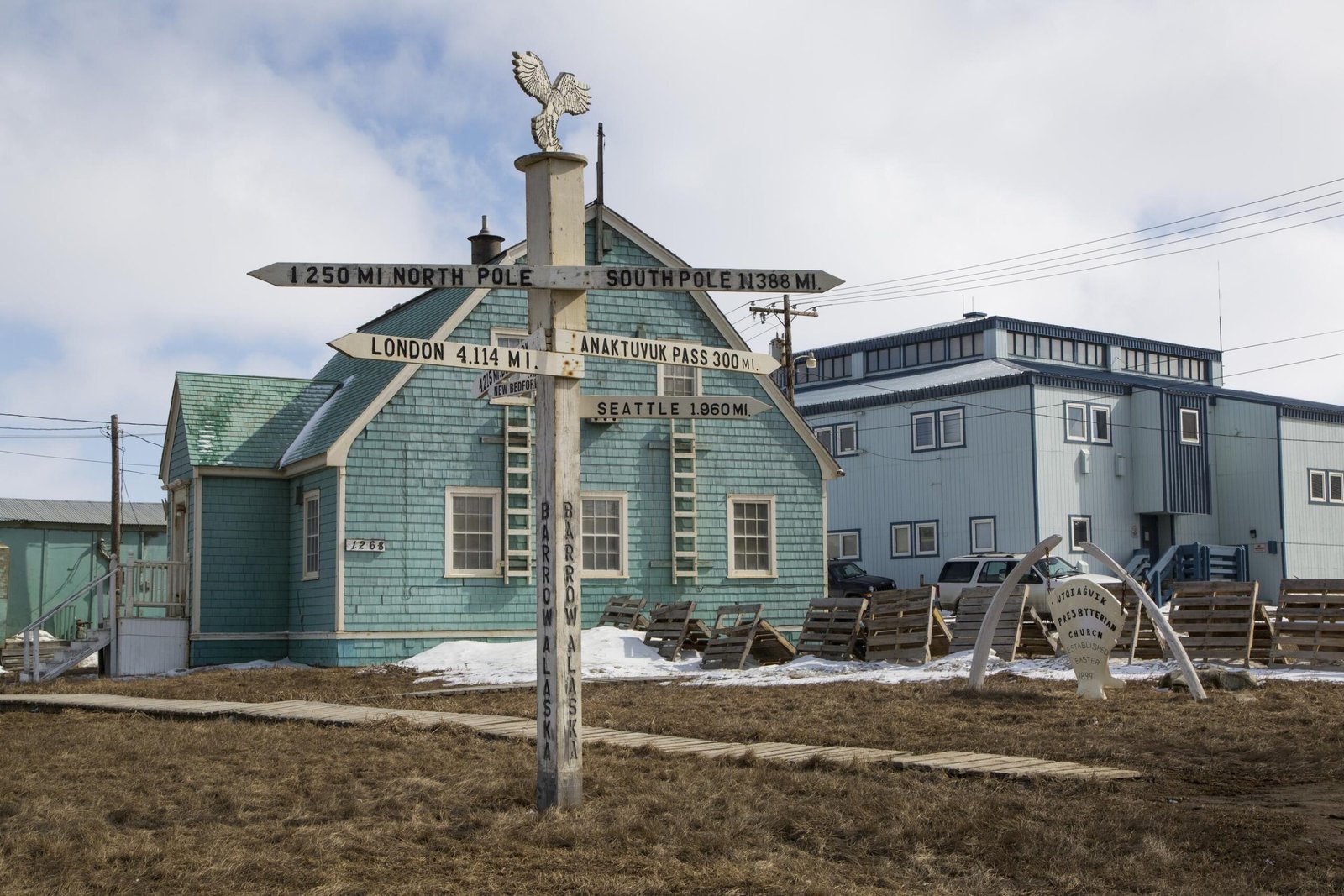
Barrow Alaska If you’ve ever wondered what it’s like to live at the absolute edge of civilization, Barrow, Alaska is your answer. Officially renamed Utqiaġvik in 2016 to honor its Iñupiat heritage, this remarkable town sits 320 miles north of the Arctic Circle, making it the northernmost community in the United States. When people talk about “the middle of nowhere,” they clearly haven’t been to Barrow—this place redefines remoteness in ways most Americans can’t even imagine.
What’s truly mind-blowing about Barrow Alaska isn’t just its location on the frozen shores of the Arctic Ocean, but the fact that approximately 4,400 people actually choose to call this place home. And we’re not talking about recent settlers—the Iñupiat people have been thriving here for over a thousand years, long before the concept of “extreme living” became a reality TV genre. Today’s Barrow represents a fascinating collision of ancient traditions and modern technology, where you might see traditional whaling crews preparing for a hunt while simultaneously checking ice conditions on their smartphones.
Getting to Barrow Alaska requires commitment because there’s literally no road that connects it to the rest of Alaska or anywhere else. You can’t just hop in your car and drive there—the only way in or out is by plane, typically through Anchorage or Fairbanks. This isolation isn’t just an inconvenience; it’s a fundamental aspect of what makes Barrow unique. Everything from fresh vegetables to construction materials must be flown in, creating an economic reality that shapes every aspect of daily life. When locals talk about “running to the store,” they mean something entirely different than what most Americans experience.
The Mind-Bending Arctic Weather Patterns You Need to Understand

Let’s get real about the weather in Barrow Alaska, because this isn’t your typical “cold winter” situation. We’re talking about a climate so extreme that it makes Minneapolis look like Miami. During winter months, temperatures regularly drop to minus 20 or minus 30 degrees Fahrenheit, and when you factor in the wind chill—which can be absolutely brutal when Arctic winds scream across the frozen ocean—you’re looking at effective temperatures that can hit minus 60 or even colder. At those temperatures, exposed skin can develop frostbite in minutes.
Here’s where things get seriously weird: from mid-November through mid-January, the sun doesn’t rise at all. Not even a little bit. This phenomenon, called polar night, lasts for about 65 days of complete darkness. Imagine waking up in darkness, going to work or school in darkness, eating dinner in darkness, and going to bed in darkness—for more than two months straight. The only natural light comes from the moon, stars, and the occasional spectacular display of aurora borealis dancing across the Arctic sky. Residents develop coping strategies like using light therapy lamps, Barrow Alaska maintaining strict schedules, and finding creative ways to stay mentally healthy during the endless night.
But nature balances the scales in spectacular fashion during summer. From around mid-May through early August, Barrow Alaska experiences roughly 82 days of continuous daylight—the famous midnight sun. The sun literally never sets; it just makes a lazy circle around the horizon. Kids play outside at 2 AM in broad daylight. People barbecue at midnight. Your circadian rhythm completely loses its mind until you adjust. Blackout curtains aren’t a luxury here—they’re an absolute necessity if you want any hope of convincing your brain it’s time to sleep. First-time visitors often report feeling completely disoriented by the never-ending daylight, experiencing a weird energy that makes it hard to wind down.
The Deep-Rooted Iñupiat Culture That Defines This Region
The Iñupiat people aren’t newcomers to Barrow Alaska—they’ve been the masters of this frozen domain for at least 1,500 years, with archaeological evidence suggesting even longer occupation. These weren’t just people who happened to survive in a harsh environment; they were sophisticated innovators who developed incredibly advanced techniques for not just surviving but actually thriving in one of the planet’s most challenging climates. Their traditional knowledge encompasses everything from reading subtle ice formations to predicting weather patterns, from understanding animal migration routes to creating clothing that can withstand Arctic conditions.
Subsistence whaling remains the absolute cornerstone of Barrow Alaska cultural identity in Barrow. When spring arrives and the bowhead whales begin their annual migration past the coast, the entire community shifts its focus to whaling season. This isn’t recreational hunting—this is a federally protected subsistence practice that’s been central to survival for millennia. When a whaling crew successfully lands a bowhead whale (which can weigh up to 100 tons), the entire community celebrates. The meat, (whale skin and blubber), and other parts are distributed throughout Barrow according to traditional sharing customs that ensure everyone benefits from the harvest.
Cultural celebrations like Nalukataq, the whaling festival held in June, showcase traditions that have been passed down through countless generations. The blanket toss—where people are launched high into the air from a large sealskin blanket—originally served a practical purpose, allowing hunters to scout for whales from elevated vantage points. Today it’s both celebration and sport. Traditional Iñupiaq dancing, drumming with handmade drums, and the preparation of traditional foods bring the community together in ways that strengthen cultural bonds. The Iñupiaq language is actively taught in schools, Barrow Alaska and elders work to pass down traditional knowledge to younger generations, fighting to preserve cultural identity in an increasingly connected world.
What Daily Life Actually Looks Like in America’s Arctic Frontier
Contrary to what you might imagine, Barrow Alaska isn’t some primitive outpost where people live in igloos (though people certainly know how to build them if needed). This is a modern community with amenities that would surprise most outsiders. There’s Samuel Simmonds Memorial Hospital providing healthcare services, a well-established school system, Ilisagvik College (Alaska’s only tribal college), several grocery stores, a handful of restaurants, hotels, and even a movie theater. High-speed internet keeps residents connected to the global community, though connectivity can be expensive and sometimes unreliable.
The catch? Everything costs an absolute fortune. We’re talking prices that make San Francisco look affordable. Barrow Alaska A gallon of milk can easily run you $10 to $12. A simple bag of apples might cost $15 or more. A loaf of bread? Probably $8. Why? Because literally everything except locally harvested food must be flown in by cargo plane. The shipping costs are astronomical, and retailers pass those costs directly to consumers. As a result, many families rely heavily on subsistence hunting and fishing to supplement store-bought groceries. Throughout the year, people harvest caribou, seal, whale, fish, ducks, and geese according to traditional seasonal patterns and modern regulations.
Housing presents unique engineering challenges thanks to the permafrost—permanently frozen ground that lies just beneath the surface. You can’t just pour a foundation and build a house like you would in the lower 48 states. Barrow Alaska If a heated building sits directly on permafrost, the heat gradually melts the frozen ground, causing the structure to sink, shift, and ultimately fail. Buildings in Barrow must be constructed on specialized pilings or thermosiphon foundations that prevent heat transfer to the ground. Water and sewer systems require constant heating and insulation to prevent freezing. Despite these challenges and the associated costs, people create comfortable homes, raise families, pursue careers, and build rich, meaningful lives in conditions most Americans would consider unbearable.
The Incredible Wildlife That Calls the Arctic Home
The Arctic landscape around Barrow Alaska might appear desolate and lifeless to the untrained eye, but it actually supports an astonishing array of wildlife superbly adapted to extreme conditions. Polar bears, the Arctic’s apex predators, occasionally wander into town, especially during fall when sea ice hasn’t fully formed yet. These encounters aren’t tourist attractions—they’re serious safety situations. The community maintains a polar bear patrol during peak seasons, and residents are educated from childhood about polar bear safety protocols. Many people carry firearms when traveling outside settled areas, not for sport but for legitimate protection.
The Arctic Ocean waters off Barrow Alaska coast create a rich marine ecosystem. Besides the culturally significant bowhead whales, you’ll find beluga whales, several species of seals, walrus, and various fish species that thrive in these frigid waters. Birdwatchers can observe snowy owls year-round, along with seasonal visitors like Arctic terns (which migrate an incredible 44,000 miles annually), various species of geese, ducks, and shorebirds. During the brief summer months, the tundra absolutely explodes with birdlife as millions of migratory birds arrive to nest and raise their young before the harsh winter returns.
The landscape itself reveals fascinating natural features shaped by extreme cold. Traditional ice cellars, carved deep into the permafrost, have served as natural refrigeration for centuries, keeping harvested meat fresh year-round without electricity. The coastline constantly evolves as sea ice dynamics shift and coastal erosion reshapes the shore. Barrow Alaska Climate change has become an immediate, visible reality for Barrow residents, who’ve witnessed dramatic changes in their environment over just the past few decades—thinner sea ice, shorter winters, changes in animal migration patterns, and increased coastal erosion that threatens community infrastructure.
The Real Challenges Facing Barrow Future
Climate change isn’t an abstract debate topic in Barrow Alaska—it’s a daily reality with serious consequences. The Arctic is warming approximately twice as fast as the global average, and the effects are impossible to ignore. Sea ice now forms later in fall and melts earlier in spring than it did just 30 years ago, affecting traditional hunting patterns and making subsistence activities more dangerous. Permafrost is warming and in some areas thawing, threatening the structural integrity of buildings, roads, and critical infrastructure. Coastal erosion has accelerated dramatically, with some areas losing several feet of shoreline per year.
Economic sustainability represents another significant challenge for Barrow’s future. The local economy has historically depended heavily on revenue from North Slope oil production, which has brought jobs, tax revenue, and funding for community services. However, as global energy markets evolve and production levels fluctuate, the community recognizes the need for economic diversification. Tourism brings some revenue—visitors travel to Barrow to experience the midnight sun, witness the northern lights, and learn about Iñupiat culture—but it remains a relatively minor economic contributor. Government jobs, education, and healthcare provide employment stability, but opportunities for young people remain limited.
Despite these substantial challenges, Barrow Alaska residents demonstrate remarkable resilience and adaptability—qualities that have defined this community for generations. There’s growing interest in developing renewable energy infrastructure, including wind and solar projects (yes, solar panels can work in the Arctic during the summer months of continuous daylight). Educational initiatives focus on combining traditional knowledge with modern science to address climate adaptation. Community leaders are working on comprehensive planning to address coastal erosion, including the possibility of relocating some infrastructure. The same spirit that allowed the Iñupiat to thrive here for over a millennium continues to drive innovation and adaptation in the face of unprecedented challenges. Barrow isn’t giving up—it’s evolving, just as it always has Barrow Alaska.