

Caitlin Clark Injury when fans search for they are not just looking for a medical update. They want clarity. They want to understand what happened, how serious it is, how it affects her team, and what it means for her long-term future. That level of interest speaks volumes about her importance to the game.
Caitlin Clark has become one of the most influential figures in modern basketball. Her scoring ability, deep shooting range, court vision, and competitive mindset have made her a household name. So naturally, any injury involving her becomes a major talking point across sports media.
In this detailed and professionally written article, we will break down what is known about Caitlin Clark Injury, how injuries affect elite basketball players, how recovery timelines typically work, and what fans should realistically expect. Let’s take a closer look at the situation from an expert perspective while keeping it easy to understand.
What Happened Understanding the Caitlin Clark Injury Situation
Whenever an elite athlete goes down or appears limited on the court, speculation begins immediately. In Caitlin Clark Injury case, attention intensified because of her central role in every game she plays. Whether the injury occurred during a high-impact play, through repetitive strain, or from a minor collision, even small setbacks can raise concerns.
Basketball injuries often happen in fast, transitional moments. Guards like Clark constantly change direction, accelerate, decelerate, and absorb contact. That style of play places significant stress on the lower body, particularly the ankles, knees, and hips. If she experienced discomfort in any of these areas, it would not be surprising given her high usage rate.
It is also important to remember that not every injury is catastrophic. Many athletes deal with minor strains, sprains, or soreness throughout the season. The difference with a player of Caitlin Clark Injury caliber is that every small issue becomes magnified because of her importance to her team’s offense and overall success.
Why Caitlin Clark Health Is So Important to Her Team
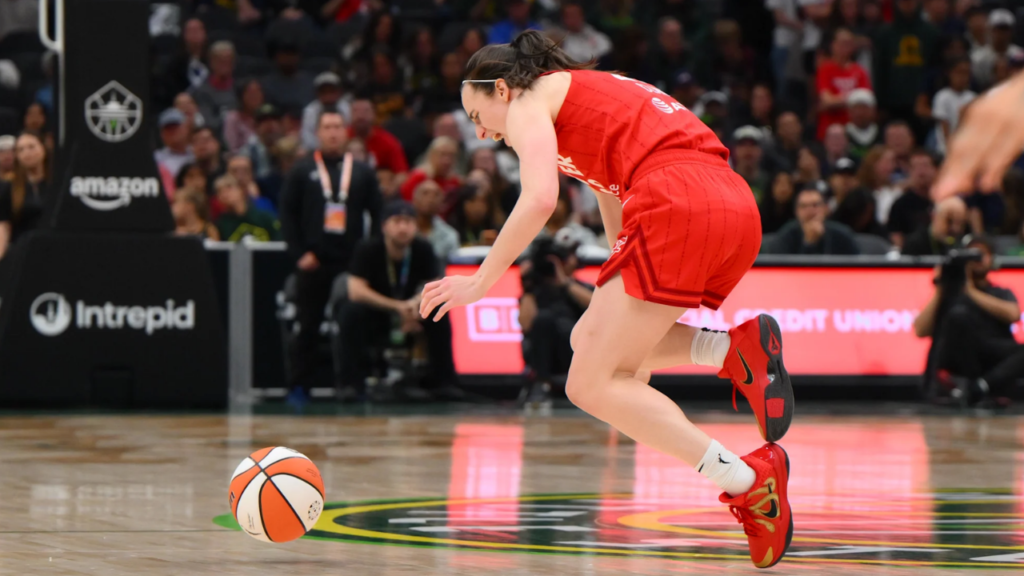
Caitlin Clark Injury is not just another starter. She is the engine that drives the offense. Her ability to create shots, extend defenses with deep three-point range, and facilitate plays for teammates changes how opponents prepare.
When a player of her stature is injured or limited, it alters the entire game plan. Defenses no longer have to stretch as far out to guard the perimeter if her mobility is compromised. Teammates may need to take on larger offensive roles, which can disrupt rhythm and efficiency.
Beyond statistics, there is a psychological factor. Teams feed off their leader’s confidence and aggression. If Clark cannot play at full speed, it affects spacing, tempo, and overall chemistry. Caitlin Clark Injury That is why even minor injuries become strategic concerns for coaching staffs.
Her presence impacts ticket sales, television ratings, and media attention as well. That broader influence makes her health not only a team issue but also a league-wide consideration.
Common Basketball Injuries for Elite Guards and How They Recover
To understand the Caitlin Clark injury conversation properly, it helps to examine the types of injuries guards typically face. Quick, explosive players are especially vulnerable to ankle sprains, knee strains, hamstring tightness, and hip flexor issues.
Ankle sprains are among the most common basketball injuries. They occur during sudden changes of direction or when landing awkwardly. Mild sprains may require only days of rest, while moderate cases can take weeks for full recovery.
Knee-related soreness can also develop from heavy minutes and repetitive motion. Guards who carry high scoring loads often experience cumulative stress rather than one dramatic incident. Recovery usually involves physical therapy, load management, and strengthening exercises to prevent recurrence.
The key factor in any recovery is not just healing the Caitlin Clark Injury but regaining confidence. Athletes must trust their bodies again. Rushing back too early increases the risk of re-injury, which is something teams work hard to avoid.
The Role of Load Management and Modern Sports Medicine
Modern sports medicine has transformed how injuries are handled. In previous eras, players often pushed through pain. Today, teams take a more strategic approach, focusing on long-term health rather than short-term gains.
Load management plays a major role. If Caitlin Clark Injury is dealing with soreness or a minor injury, coaches may reduce her minutes temporarily. This is not a sign of weakness. It is a calculated decision designed to preserve her explosiveness over the course of a long season.
Recovery protocols now include advanced treatments such as cryotherapy, targeted strength programs, mobility drills, and specialized rehabilitation sessions. These resources significantly shorten recovery timelines compared to previous decades.
It is also worth noting that elite athletes have access to top-tier medical teams. When someone like Caitlin Clark faces an injury, her recovery plan is carefully structured, monitored, and adjusted daily to ensure optimal progress.
How Injuries Affect Performance Even After Return
One important aspect many fans overlook is that returning to play does not always mean returning to peak form immediately. Even minor injuries can affect rhythm, timing, and explosiveness for a short period.
For a shooter like Caitlin Clark Injury, lower-body stability is essential. Her long-range accuracy depends heavily on balance and leg drive. If she is recovering from an ankle or knee issue, it might subtly impact her shooting mechanics until she regains full strength.
Conditioning can also dip slightly during recovery. Basketball requires constant movement, and even a brief absence from full practice intensity can affect stamina. However, elite athletes typically regain conditioning quickly once cleared.
The most important indicator of recovery is confidence. When Caitlin Clark Injury resumes attacking the rim aggressively and pulling up from deep without hesitation, that is usually the clearest sign she feels physically secure.
The Mental Side of Injury Recovery
Injuries are not just physical challenges. They test mental resilience as well. For a highly competitive athlete, sitting out or playing at less than full strength can be frustrating.
Athletes often worry about losing rhythm, falling behind competitors, or letting their teammates down. Managing that mental pressure is a key part of recovery. Confidence-building exercises, positive reinforcement from coaches, and gradual reintegration into full-speed play help rebuild trust in the body.
Caitlin Clark Injury has shown throughout her career that she thrives under pressure. That competitive drive can actually accelerate mental recovery. However, patience remains essential. The goal is sustained health, not a rushed return.
Long-Term Outlook Should Fans Be Concerned?
Based on how modern sports injuries are handled, most short-term basketball injuries do not have long-term consequences when properly treated. The key is accurate diagnosis and disciplined rehabilitation.
For a player with Caitlin Clark Injury work ethic and support system, recovery tends to be thorough. Teams prioritize protecting cornerstone players, especially those who represent both competitive success and market appeal.
Unless the injury involves structural damage or repeated setbacks, there is usually no reason for long-term concern. Minor strains and sprains are part of an athlete’s journey, particularly in a physically demanding sport like basketball.
The bigger picture is durability over time. If managed correctly, even temporary injuries can serve as reminders of the importance of conditioning, strengthening, and recovery discipline.
Final Thoughts on the Caitlin Clark Injury Discussion
When people search for Caitlin Clark injury they are reacting to how vital she is to the sport. Her impact extends beyond points per game. She influences strategy, viewership, and the broader growth of women’s basketball.
Injuries are an inevitable part of high-level competition. What matters most is how they are managed. With modern sports medicine, structured recovery plans, and careful monitoring, most setbacks are temporary obstacles rather than career-defining events.
For now, the smartest approach is patience and perspective. Elite athletes often return stronger, more disciplined, and even more motivated after overcoming physical challenges.
Caitlin Clark Injury career is built on resilience, skill, and competitive fire. An injury may slow the pace temporarily, but it rarely stops the momentum of a player determined to redefine the game.